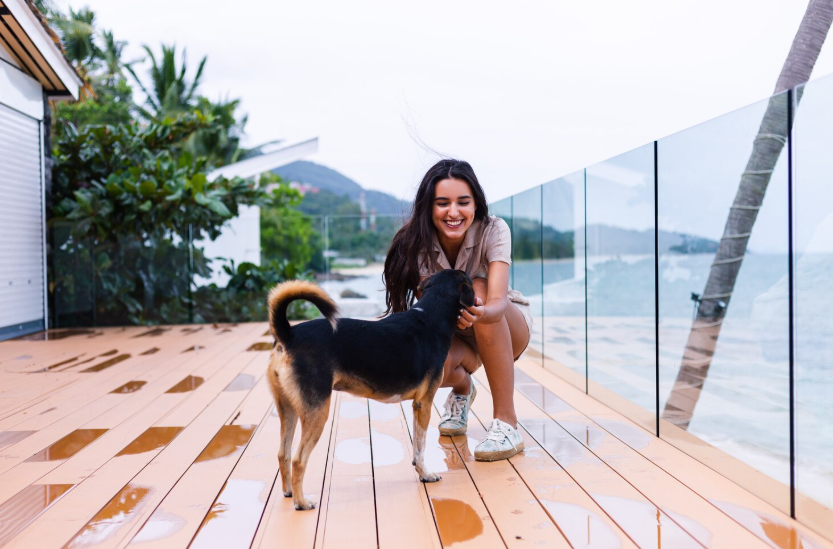
Royse City is dog country. Drive through any of the newer subdivisions off Highway 66 or Farm-to-Market 548, and you’ll see large yards, active dogs, and a lot of backyard pools. That combination is genuinely more dangerous than most pet owners realize until something goes wrong.
Dogs can fall into pools and drown. It happens more than people expect, particularly with older dogs, puppies, short-legged breeds, and dogs who panic in the water rather than naturally finding the steps. Working with a leading glass fencing company helps ensure your pool is secure for pets and people alike. Cats are less likely to go in willingly, but a cat running at full speed along a pool deck in the dark has limited options if it goes over the edge. An unfenced pool is a hazard to pets year-round, not just during swim season.
Here’s why glass is the best fencing material for households with animals and what to think about when you’re specifying an installation.
Why Traditional Fencing Fails for Pets
The problem with most pool fencing options isn’t that they don’t create a barrier. It’s that they create the wrong kind of barrier for animals.
Wood picket fencing and wrought iron both have gaps. A determined medium-sized dog can push through picket spacing or squeeze under a gate with an imprecise ground gap. Wrought iron has horizontal bars that give athletic dogs a foothold for jumping. Aluminum fencing is lighter and more flexible than it looks, and a large dog hitting it at speed puts real stress on the posts.
Mesh and chain link are arguably the worst options for dogs. They’re easy to climb, they flex under pressure, and a dog that gets its paw or jaw caught in mesh during a panicked attempt to get through can injure itself badly.
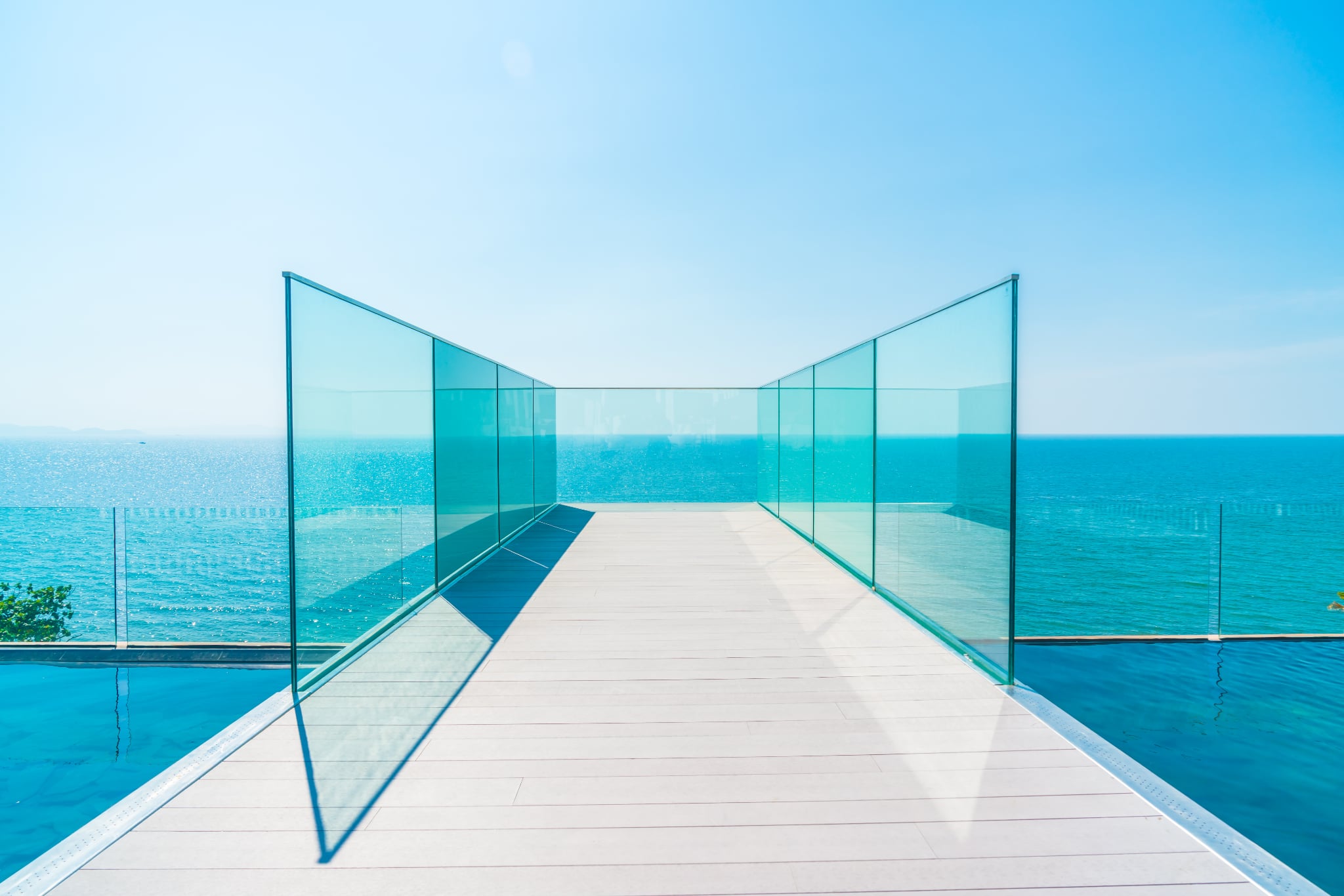
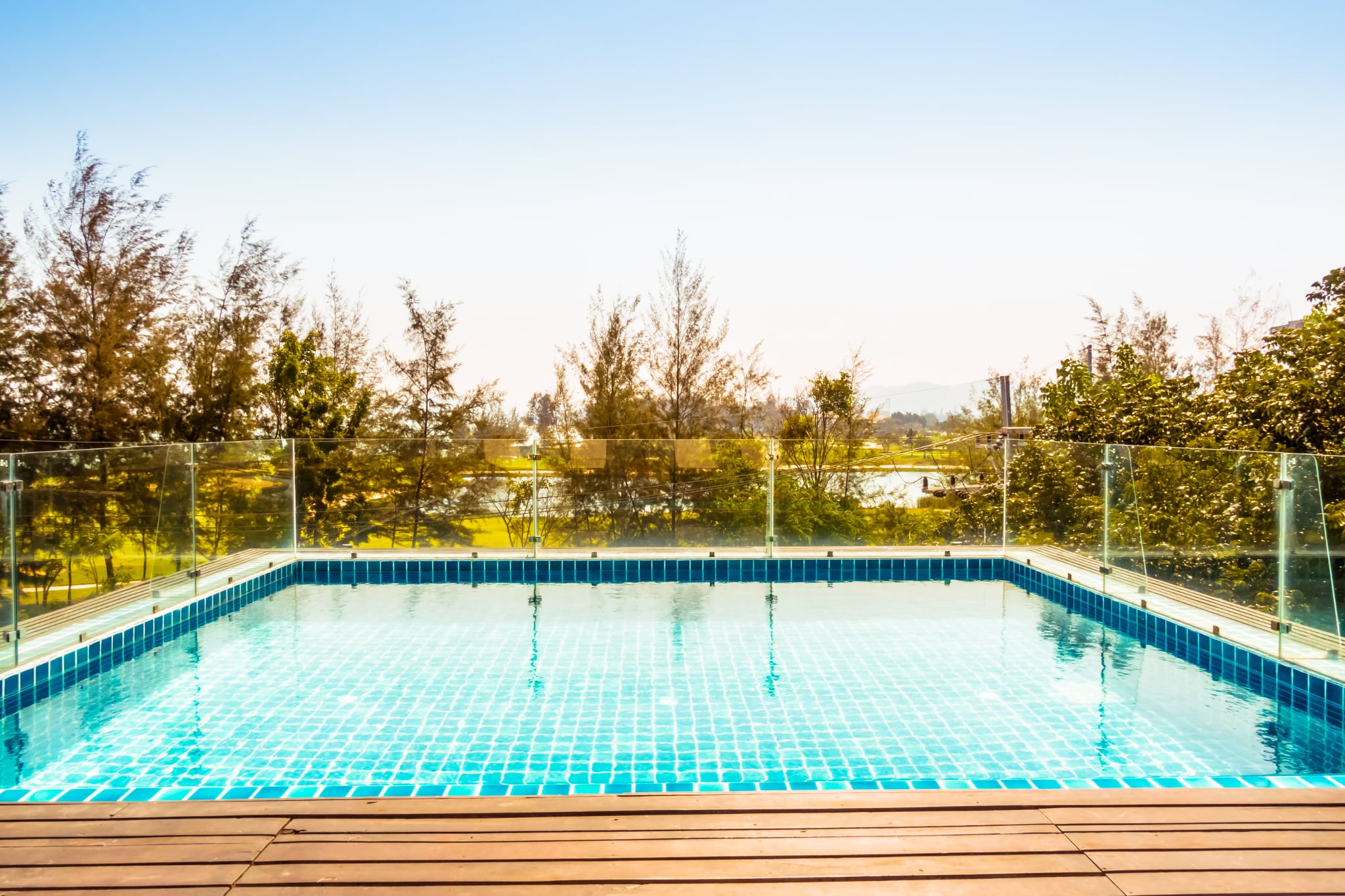
Glass removes most of these failure points. There are no horizontal rails to step on, no gaps to push through, and no flex in the panels. The smooth surface gives pets nothing to grip, and the solid base-to-top construction creates a continuous barrier rather than a series of spaces that can be exploited.
What Glass Does Well for Dogs Specifically
Dogs interact with pool fencing differently than humans do. They run along the fence line, they press their nose against it to see what’s on the other side, and big dogs will lean their full body weight against a panel to get a better look at something interesting. Glass handles all of this well.
The 1/2″ tempered panels we install are engineered to absorb lateral force without flexing or shifting. A 90-pound Labrador pressing against the glass doesn’t stress the panel. The spigot mounting holds the base solid, even under repeated impact. Smaller dogs and cats can’t find purchase on the smooth surface, so jumping attempts don’t gain traction.
The transparency matters for dogs more than most owners expect. Dogs that can see through the fence and watch what’s happening on the poolside are significantly less likely to obsessively work the fence line trying to get through. A solid fence that blocks the view creates more frustrated, persistent behavior than a transparent one.
The Gap Question
This comes up in every consultation with pet owners who have small dogs or cats. The Texas pool safety code requires that the gap at the bottom of a pool fence be small enough to prevent a child from passing under it. In practice, this means a gap of no more than four inches at ground level.
For most dogs, that gap is fine. A four-inch clearance won’t allow any dog larger than a very small breed to pass through, and it’s too tight for even a slender cat to squeeze under comfortably. For households with very small dogs or cats, we can discuss installation options that bring the bottom clearance closer to two inches. It’s worth the conversation if you have a miniature breed or a cat that has surprised you before with what it can fit through.
Cats get extra attention in pet households. The self-closing, self-latching mechanism required by Texas code is also exactly what you need to make sure a gate that gets nudged open by a dog nose or a bumping hip doesn’t stay open.
Cleaning With Pets Around the Pool
This is the honest part of the pet conversation. Glass fencing in a household with dogs is going to get dirtier faster than one without. Nose prints at muzzle height, paw smears along the lower panels after a muddy run through the yard, and the general grime that comes from a large dog enthusiastically investigating the glass are all real factors.
The good news is that glass is still the easiest surface to clean. A damp microfiber cloth removes nose prints in seconds. A full wipe-down with warm, soapy water and a rinse handles anything heavier. You’re likely cleaning more often than the eight-to-ten week schedule we recommend for standard households, but the cleaning itself is no harder.
One thing to watch: dogs that scratch at the glass. It’s rare, but some dogs, particularly anxious dogs or dogs that are highly motivated by something on the other side of the fence, will scratch at the glass surface. Consistent light scratching over time can create surface marks. If you have a dog with this behavior, a quick conversation at the consultation stage lets us discuss panel positioning and gate placement to reduce the motivation.
One More Reason Visibility Matters
We covered this in the safety post, but it bears repeating in the pet context. A fence you can see through lets you monitor your pets from inside the house.
DFW summers mean your dogs are outside in 100-degree heat, and the pool deck gets even hotter than the ambient air. Being able to glance out a kitchen window or sliding door and confirm your dog isn’t in distress near the water matters. A solid fence that blocks the sightline removes a layer of supervision that costs nothing to preserve with glass.
Ready to Talk Through Your Layout?
We’re based in Royse City and have installed fencing across properties with every size and breed combination you can imagine. If you’re a pet household, we’ll ask the right questions upfront: how many animals, what sizes and breeds, any known fence-testing behavior, and what your yard layout looks like relative to the pool.
Our installations are backed by a one-year workmanship warranty and a two-year product warranty on materials. We use 1/2″ tempered and polished glass and marine-grade stainless steel hardware on every job. We serve Royse City, Rockwall, Dallas, Plano, Frisco, and communities throughout greater DFW.
Related Topics: