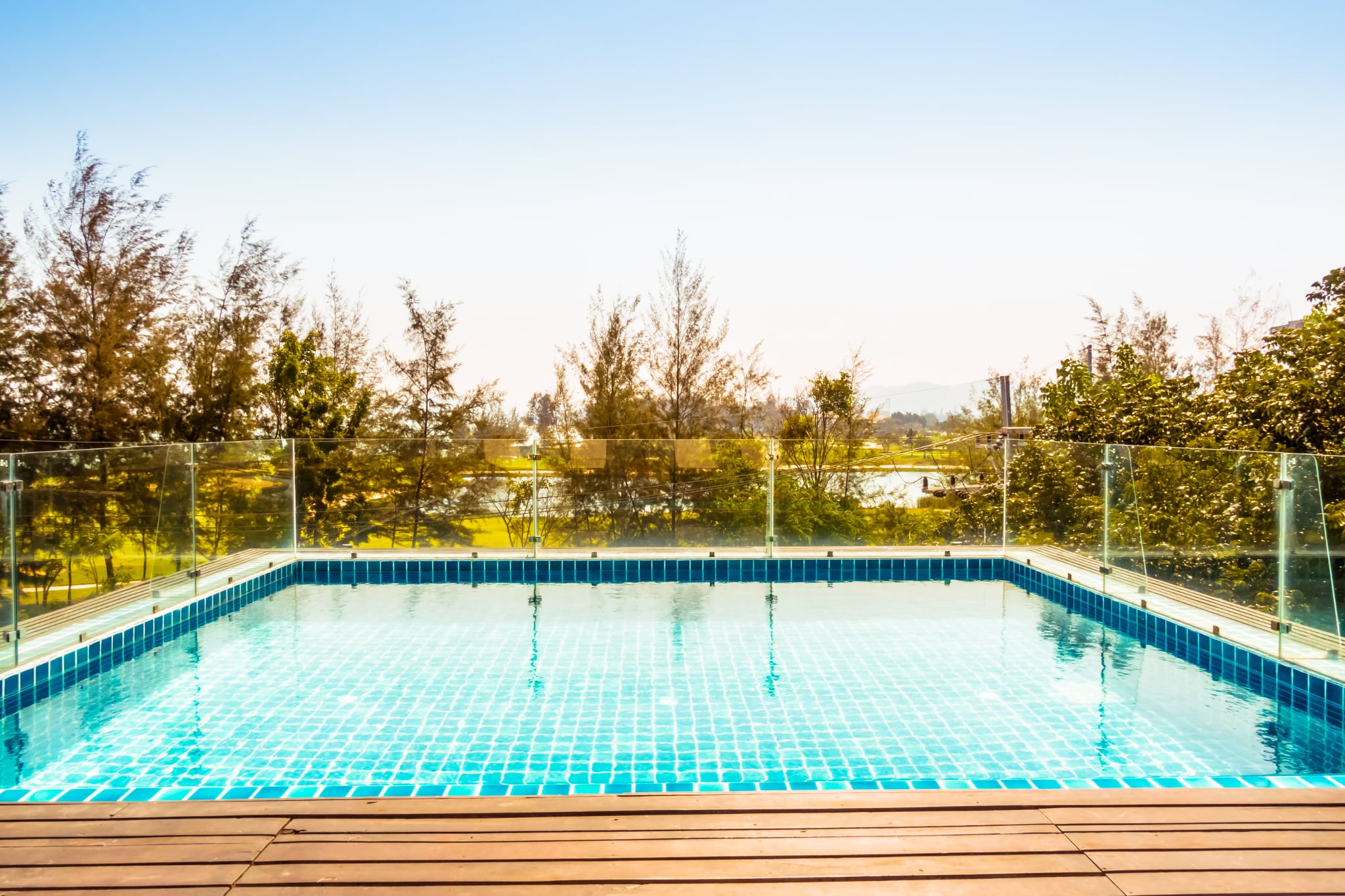
Glass pool fences are built to last, but they’re not unbreakable. Breakage can happen, and most of the time it comes down to a few common causes. Knowing these can help you protect your investment and spot issues early, especially when working with skilled glass fencers.
Manufacturing Defects
This is the most common cause of spontaneous shattering, and it can happen even with properly installed, well-maintained fences.
During the tempering process, microscopic particles called nickel sulfide inclusions can become trapped inside the glass. These tiny impurities are nearly impossible to detect during quality control, but over time, as the glass expands and contracts with temperature changes, they create internal stress that can eventually cause the panel to shatter without any external force.
Uneven tempering during production can have a similar effect. If the heating and rapid-cooling process isn’t uniform across the entire panel, internal tensions develop that weaken the glass at specific points. Poor edge finishing during manufacturing, which leaves micro-fractures along the panel edges, is another defect that may not show up immediately but worsens with every thermal cycle.
This is exactly why material quality matters so much. We use premium 1/2″ tempered and polished glass on every installation, specifically because the quality of the raw material is the single biggest factor in long-term performance.
Poor Installation
Even high-quality glass can fail if it’s installed incorrectly. The two most common installation errors are improper handling and inadequate spacing.
Handling glass panels without the right equipment (suction cups, padded supports, and proper lifting technique) makes it easy to nick or chip the edges during installation. Those chips may look minor, but they create stress concentration points that grow worse every time the glass expands in the Texas heat or flexes in the wind.
Spacing matters just as much. Tempered glass expands and contracts with temperature changes. If a panel is installed too tightly against its hardware without enough room to move, that movement turns into pressure on the edges, and eventually, that pressure wins. Every panel needs adequate clearance within its mounting hardware to accommodate natural thermal movement.
Thermal Stress
Texas summers are not gentle on outdoor materials. When glass is exposed to extreme heat, or when one part of a panel heats up significantly faster than another, such as a panel in partial shade, the uneven expansion creates internal stress. In most cases, this resolves without incident, but in glass with existing weaknesses from manufacturing defects or edge damage, thermal stress is often the final trigger for a spontaneous break.
This is less of a concern with properly manufactured and installed glass, but it’s worth knowing, especially in the DFW area, where summer temperatures regularly push well past 100°F.
Physical Impact and Wear Over Time
Hard impacts (a piece of outdoor furniture blown into the fence during a storm, a direct strike from a ball, or heavy debris) can cause immediate shattering or create edge damage that leads to failure later. The North Texas storm season makes this more relevant than it might be in other parts of the country.
Beyond single impact events, general wear over time plays a role too. Constant exposure to pool chemicals, UV radiation, and moisture gradually degrades the hardware and can affect the glass panels themselves. Regular inspections are the best way to catch chips, cracks, or hardware corrosion before they escalate.
How to Reduce the Risk
Most glass fence failures are preventable. Here’s what makes the biggest difference:
Start with quality glass. Defects are built in at the manufacturing stage. There’s no way to fix substandard glass after installation, which is why we don’t cut corners on materials.
Hire experienced installers. Proper handling, correct panel spacing, and precise hardware alignment all depend on the installer knowing what they’re doing. These details aren’t obvious to someone who doesn’t work with glass fencing regularly.
Inspect your fence after major weather events. After a hailstorm, high winds, or any event that could have sent debris into your fence, do a close visual inspection of every panel, especially the edges and corners. Look for chips, cracks, or any signs of stress.
Keep up with hardware maintenance. Loose or corroded hardware changes how the load is distributed across the panels. Catching it early during a routine inspection prevents bigger problems down the road.
If you have concerns about an existing fence or are considering a new installation, we’re happy to take a look. We serve homeowners and commercial properties across Royse City, Rockwall, Dallas, Plano, Frisco, and the greater DFW area. Contact us to schedule a consultation.
Related Topics: