Glass pool fencing is one of the most durable, low-maintenance barrier options available. That said, no outdoor structure is immune to problems, and high-quality glass fencing has specific issues worth knowing about. Most of them are preventable with the right materials and installation. The ones that do develop are usually straightforward to address if you catch them early.
Here’s an honest look at the most common issues we see with glass pool fencing in the DFW area and what actually causes them.
Panel Cracking and Spontaneous Breakage
This is the issue that surprises homeowners most. A panel that looks perfectly fine can crack or shatter without any visible impact. The most common cause is nickel sulfide inclusions, microscopic particles that occasionally become trapped in glass during the tempering process. As the panel expands and contracts through Texas temperature cycles, those inclusions create internal stress that eventually causes the glass to fail.
Edge damage during installation is another culprit. Tempered glass is strong across its surface but vulnerable at the edges. If a panel is dropped, dragged, or installed with its edges making direct metal contact without proper rubber cushioning, a micro-fracture can form that worsens over time and eventually causes the panel to crack under normal load.
Poor installation that doesn’t account for thermal expansion is also a factor here. DFW summers push surface temperatures well above ambient air temperature, and glass expands significantly in that heat. If panels are mounted too tightly without adequate spacing, the expansion has nowhere to go. The result is stress at the mounting points that can crack the panel or damage the spigot base.
The fix starts before installation. We use 1/2″ tempered and polished glass from reputable suppliers and handle every panel carefully during transport and installation. If you have an existing panel showing any edge chips, visible stress lines, or cloudy internal marks, have it inspected before it becomes a safety issue.
Mineral Deposits and Water Staining
This is the most common cosmetic issue for DFW homeowners, and it’s almost entirely driven by the area’s notoriously hard water. Calcium and magnesium in the water leave white mineral deposits on the glass, particularly near the waterline and at the bottom of panels where splash lands and evaporates. Left alone, those deposits etch into the glass surface over time and become increasingly difficult to remove.
Pool chemical overspray compounds the problem. Chlorinated water that splashes onto the glass and dries repeatedly leaves its own residue layer on top of the mineral buildup.
A routine cleaning schedule every eight to ten weeks prevents the buildup from reaching the point where it causes permanent surface damage. For deposits that have already formed, a 50/50 white vinegar and water solution applied directly to the affected area and scrubbed with a soft cloth removes most of them. Heavy buildup may require a dedicated calcium and lime remover. What won’t work, and what causes damage, is using abrasive pads, steel wool, or strong chemical cleaners that are not rated for tempered glass.
Hardware Corrosion and Loosening
Spigots, clamps, hinges, and gate hardware live in one of the harshest environments a metal component can face: constant moisture, pool chemicals, and direct UV exposure. Even marine-grade stainless steel, which is what we use, can show surface corrosion if chlorine residue is allowed to build up on it over time without being rinsed off.
More commonly, we see hardware that has worked loose at the base. This happens when spigots aren’t properly set during installation, when the concrete base wasn’t given adequate cure time before the fence was put into service, or when a panel has been bumped repeatedly over time. A loose spigot that isn’t addressed starts to put lateral stress on the glass panel above it, which leads to edge stress and, eventually, cracking.
During routine maintenance, walk the fence line and check every piece of hardware by hand. Anything that moves at the base needs to be addressed. Wipe down all hardware during each cleaning session to remove chlorine residue, and apply a silicone lubricant to hinges and the gate latch mechanism once or twice a year.
Gate Failure
The gate is the most heavily used component of the fence and the most safety-critical. A gate that doesn’t self-close and self-latch reliably isn’t just a code violation; it’s a real hazard for families with young children.
The most common gate issues we see are hinge tension that has drifted out of adjustment, latch mechanisms that have accumulated grit or corrosion and no longer return to the locked position cleanly, and alignment problems caused by the gate sagging on its hinges over time.
Test your gate every month. Open it from both directions, release it without touching it, and confirm it swings fully closed and latches on its own every time. If it’s hesitating, drifting open, or requiring manual help to close, the hinge tension needs to be adjusted. Most self-closing hinges have an oil-pressure adjustment valve specifically for this. If the latch is the issue, clean it with a damp cloth and lubricate it. If alignment is off, the hinge mounting points may need to be checked.
Poor Installation and Code Non-Compliance
A significant portion of the issues we get called in to assess trace back to the original installation. Panels installed without proper spacing for thermal expansion, spigots set at slightly wrong angles, gates hung without self-closing hardware, fence heights that don’t meet Texas code requirements: all of these create problems that show up months or years after the installer has left.
Texas requires pool fencing to be a minimum of 48 inches in height, with self-closing, self-latching gates that open away from the pool. Bottom gaps must be small enough to prevent a child from passing through. These aren’t suggestions. A fence that doesn’t meet these requirements puts your family at risk and can result in fines if identified during an inspection.
If your fence was installed by someone without specific glass fencing experience, or if you purchased a home with an existing glass fence and aren’t sure of its history, a professional inspection is worth doing. We offer service calls for exactly this, and can identify any issues with panel condition, hardware integrity, and code compliance in a single visit.
Visibility Hazards for Children and Pets
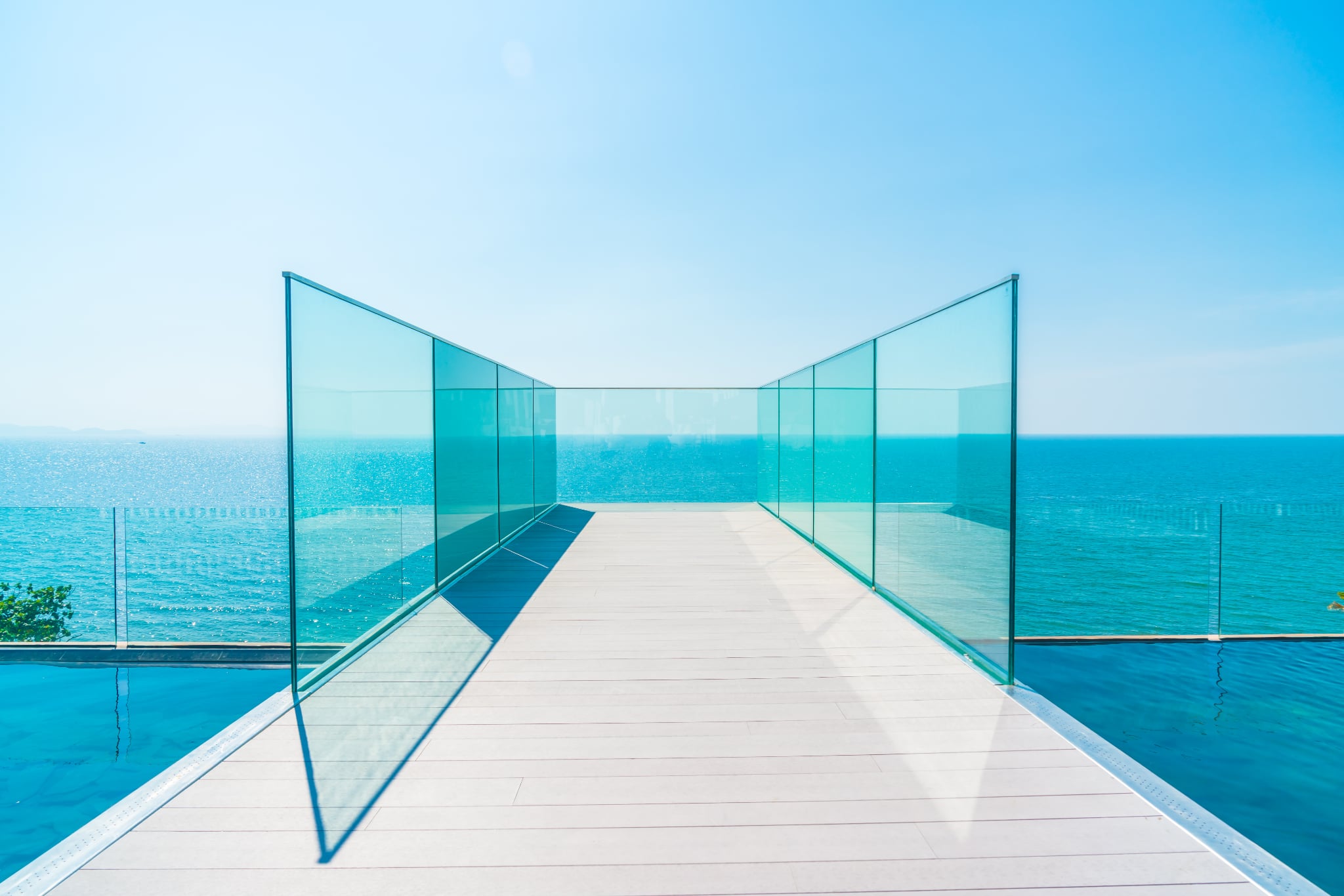
Frameless glass is nearly invisible in certain lighting conditions, which is one of the things that makes it beautiful. It’s also what causes people and animals to walk directly into it. Children learning their way around a new backyard, dogs running toward the pool area, and even adults moving quickly in bright sunlight can fail to register the glass is there until they’ve made contact with it.
The best solution is a combination of installation positioning and simple visual cues. Placing the fence where it’s not directly backlit reduces invisibility. Frosted or etched panels at lower heights, clear UV-reflective decals, or decorative hardware along the fence line all give the eye something to register without compromising the clean aesthetic.
When to Call for Help
Most of the issues described above are manageable with routine attention. When you notice a panel chip or edge crack, a spigot that won’t stay tight after retightening, a gate that keeps drifting open, or surface etching that won’t clean up, reach out before the problem develops further.
We serve Royse City, Rockwall, Dallas, Plano, Frisco, and communities throughout greater DFW. Our work is backed by a one-year installation warranty and a two-year product warranty on materials. To schedule a service call or inspection, call us at (214) 316-8852 or reach out through our website.
Related Topics: